

This article may contain affiliate links. If you buy through them, we may earn a commission at no extra cost to you.
If you've ever felt that money slips through your fingers no matter how hard you work, you're not alone. Learning how to change your money mindset is often the first step toward a calmer, more confident relationship with money, and it's something anyone can start today.
Your money mindset is the collection of thoughts, feelings and beliefs you hold about money. It quietly shapes almost every financial choice you make: whether you ask for a raise, how you react to a bill, whether you save or spend, and even whether you believe a better financial future is possible for you.
The good news is that a mindset isn't fixed. It was learned, which means it can be relearned. In this guide, you'll find nine practical steps to help you replace limiting money beliefs with a healthier wealth mindset, one small habit at a time.
What Is a Money Mindset, and Why Does It Matter?
Two people can earn the same salary and end up in very different places financially. Often, the difference isn't intelligence or luck; it's the beliefs running in the background.
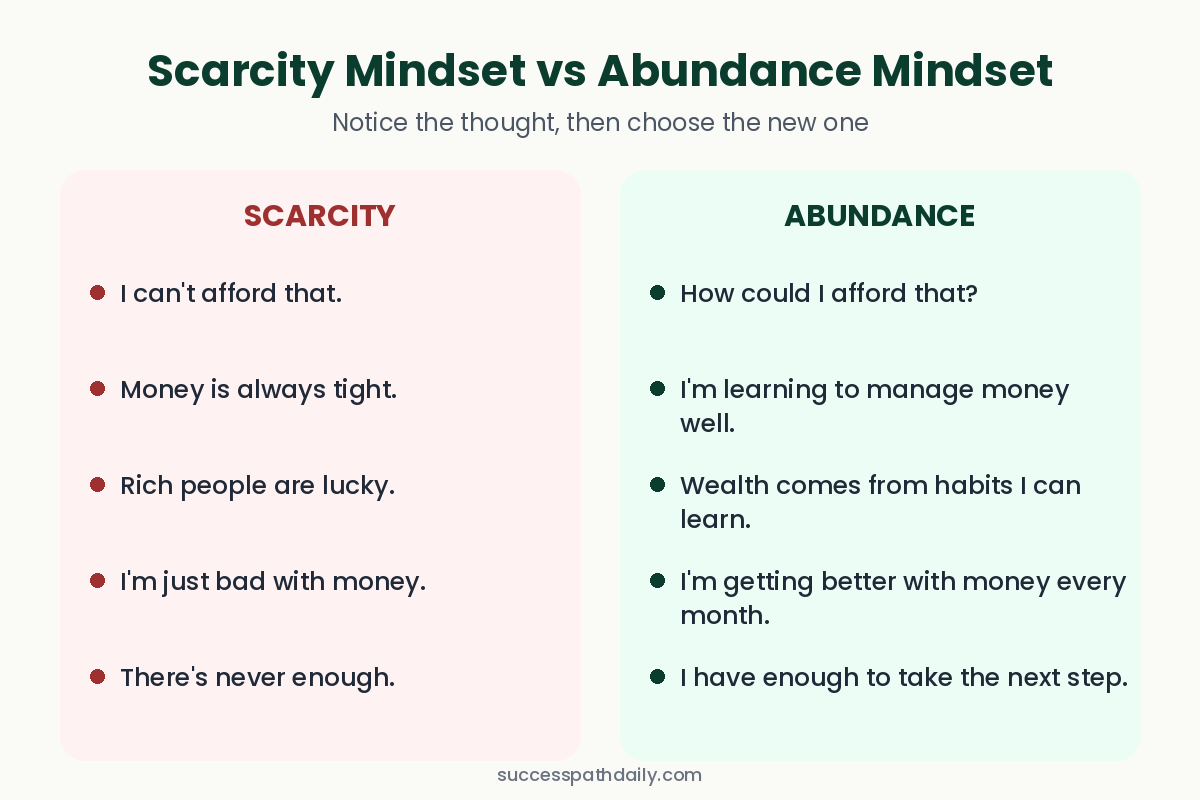
Someone with a scarcity mindset tends to see money as limited and stressful. They may avoid looking at their bank balance, feel guilty spending anything, or assume that wealth is only for "other people."
Someone with an abundance mindset sees money as a tool they can learn to manage and grow. They still face setbacks, but they're more likely to look for solutions, take sensible risks and keep learning.
Neither mindset appears overnight. Most of our money beliefs were formed in childhood, by watching our parents, hearing comments like "money doesn't grow on trees," and absorbing messages from the culture around us. That's exactly why changing them takes conscious, steady effort.
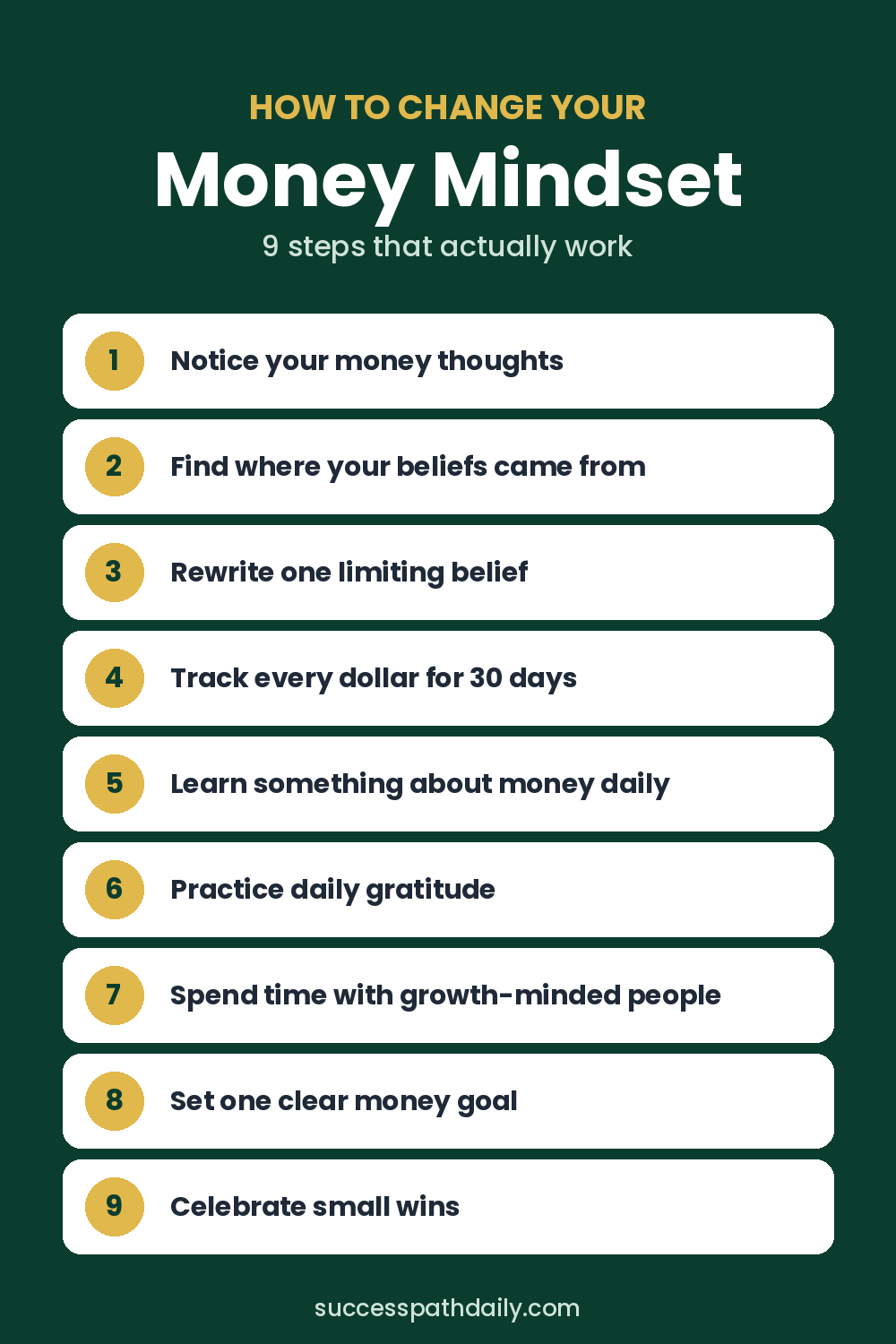
How to Change Your Money Mindset in 9 Practical Steps
Step 1: Notice Your Money Thoughts
You can't change a thought you don't notice. For the next week, pay attention to what goes through your mind whenever money comes up: paying bills, seeing a price tag, or hearing about someone else's success.
Write down the thoughts that repeat. You might notice phrases like "I can't afford that," "I'm bad with money" or "people like me don't get rich." Don't judge them; simply collect them. This list is your starting point.
Step 2: Find Where Your Money Beliefs Came From
Look at your list and ask: "Where did I learn this?" Perhaps a parent worried constantly about bills, or money was never discussed at home. Maybe a past debt or job loss left you feeling that money is unsafe.
Understanding the origin of your money beliefs takes away some of their power. You begin to see them as old lessons, not permanent truths about who you are.
Step 3: Rewrite One Limiting Belief
Choose one belief from your list and rewrite it into a more helpful, realistic version. The aim isn't to lie to yourself; it's to open a new possibility.
For example:
- "I can't afford that" becomes "How could I afford that?"
- "I'm bad with money" becomes "I'm learning to manage money better."
- "Rich people are just lucky" becomes "Wealth often comes from habits I can learn."
Repeat your new belief daily. Many people find it helpful to write it on a sticky note or set it as a phone reminder.
Step 4: Track Every Dollar for 30 Days
A healthy wealth mindset is built on awareness. For 30 days, write down everything you spend, using a notebook, a spreadsheet or a budgeting app.
This isn't about punishing yourself. It's about replacing vague worry with clear facts. Most people find at least one or two "leaks," such as unused subscriptions, and the simple act of seeing where money goes often reduces anxiety.
Step 5: Learn Something About Money Every Day
People who build wealth tend to treat money as a skill to keep improving. Spend 10 to 15 minutes a day learning: read an article on budgeting, listen to a personal finance podcast, or read a chapter of a well-regarded money book.
Over a year, those small sessions add up to dozens of hours of learning. Your confidence grows because your knowledge grows.
Step 6: Practice Daily Gratitude for What You Have
It may sound simple, but gratitude is one of the most practical tools for moving from scarcity toward an abundance mindset. A scarcity mindset focuses on what's missing; gratitude trains your attention on what's already working.
Each evening, write down three things you're thankful for, including at least one related to money: a paycheck that arrived, a bill you paid on time, or a meal you enjoyed. Over time, this habit may help reduce the constant feeling of "never enough."
Step 7: Spend Time With Growth-Minded People
The people around you influence your beliefs more than you might realize. If your conversations are full of complaints about money, it's hard to think differently.
Look for people who talk about goals, learning and opportunities. This could be a friend who's paying off debt, an online community focused on personal finance, or a mentor at work. You don't need to drop old friends, just add some new voices.
Step 8: Set One Clear Money Goal
A vague wish like "I want more money" rarely leads to action. A clear goal does. Choose one specific, realistic target, such as building a $1,000 emergency fund, paying off one credit card, or saving for a course that could boost your income.
Break it into weekly steps and write down your deadline. Having a goal gives your new mindset something to aim at.
Step 9: Celebrate Small Wins and Keep Going
Mindset change is gradual. Celebrate the small signs of progress: the first month you tracked every expense, the first time you said no to an impulse purchase, or the first $100 in your savings account.
Each win is evidence that your new beliefs are true, and evidence is what helps a new mindset stick.
How to Think Like a Millionaire (Without Being One Yet)
Learning how to think like a millionaire isn't about luxury cars or expensive habits. Many self-made millionaires are known for surprisingly ordinary habits: they spend less than they earn, invest in learning, think long term and stay patient.
You can borrow these habits today, whatever your income:
- Think in years, not days. Ask how a choice will affect you five years from now.
- Pay yourself first. Move a small amount into savings as soon as you're paid, before spending on anything else.
- Invest in yourself. Skills, health and knowledge often deliver the best long-term returns.
- Stay calm during setbacks. Treat mistakes as lessons, not proof of failure.
Tools That May Help You Stay Consistent
The hardest part of changing your money mindset is staying consistent. Some people like to support their daily routine with tools such as journals, affirmation apps or guided audio programs.
One popular option is The Billionaire Brain Wave , an audio program that its creators say is designed to support a more positive, wealth-focused state of mind. It may suit people who prefer listening to something for a few minutes each day rather than reading or journaling.
As with any program of this kind, it isn't a substitute for the practical steps above, and results vary from person to person. It's best seen as a supportive habit rather than a shortcut. If you're curious, check the official website for current pricing and the refund policy.
Frequently Asked Questions
How long does it take to change your money mindset?
It varies from person to person. Many people notice small shifts in how they think within a few weeks of consistent practice, but deeper beliefs can take months to change. Steady daily habits matter more than speed.
What is the difference between a scarcity mindset and an abundance mindset?
A scarcity mindset sees money as limited and stressful, which often leads to fear-based decisions. An abundance mindset sees money as something you can learn to manage and grow, which encourages planning, learning and sensible risk-taking.
Can changing my money beliefs really affect my finances?
Your beliefs influence your decisions, such as whether you save, negotiate your salary or learn new skills. Changing your mindset may help you make better choices over time, though your financial results also depend on income, expenses and circumstances.
Do I need a high income to build a wealth mindset?
No. A wealth mindset is about habits and attitudes, not your current income. Tracking spending, setting goals and learning about money are useful steps at any income level.
What is the first step to change my money mindset?
Start by noticing your money thoughts. Write down the beliefs that come up when you deal with money; you can't change a pattern until you can see it clearly.
Conclusion
Changing your money mindset doesn't require a dramatic overhaul. It starts with noticing your thoughts, questioning old money beliefs and building a few simple habits: tracking your spending, learning daily, practicing gratitude and setting one clear goal.
Pick one step from this guide and start today. Small changes, repeated consistently, can gradually shift how you think, and how you feel, about money.
Check out The Billionaire Brain Wave
Get the free ebook: The Money Mindset Shift
Join our free newsletter and get the ebook straight away, plus one practical money mindset tip each week.
Comments
No comments yet. Be the first to share your thoughts.
Leave a comment