
Disclosure: This article contains affiliate links. If you buy through them, we may earn a commission at no extra cost to you. We only recommend products we believe may genuinely help. Read our full disclosure
Does your mind feel busy from the moment you wake up? Thoughts jump from emails to bills to tomorrow's plans, and real calm or deep focus feels hard to reach. Many people describe the opposite feeling, that relaxed, dreamy state just before sleep or during a quiet walk, as the moment their best ideas appear.
Scientists link that calm, creative state to a type of brain activity called theta waves. In this simple guide, you'll learn what brain waves are, what theta waves are, what research suggests they may do for your brain and seven natural ways to reach a calm theta state in everyday life.
What Are Brain Waves?
Your brain contains billions of nerve cells that communicate using tiny electrical signals. When large groups of these cells fire together, they create rhythmic patterns that scientists can measure with a test called an EEG. These patterns are known as brain waves.
Brain waves are measured in hertz (Hz), meaning cycles per second. Slower waves usually appear when we are relaxed or asleep, and faster waves when we are alert and concentrating. Your brain produces all types throughout the day, but one type tends to be stronger depending on what you are doing.
The 5 Types of Brain Waves
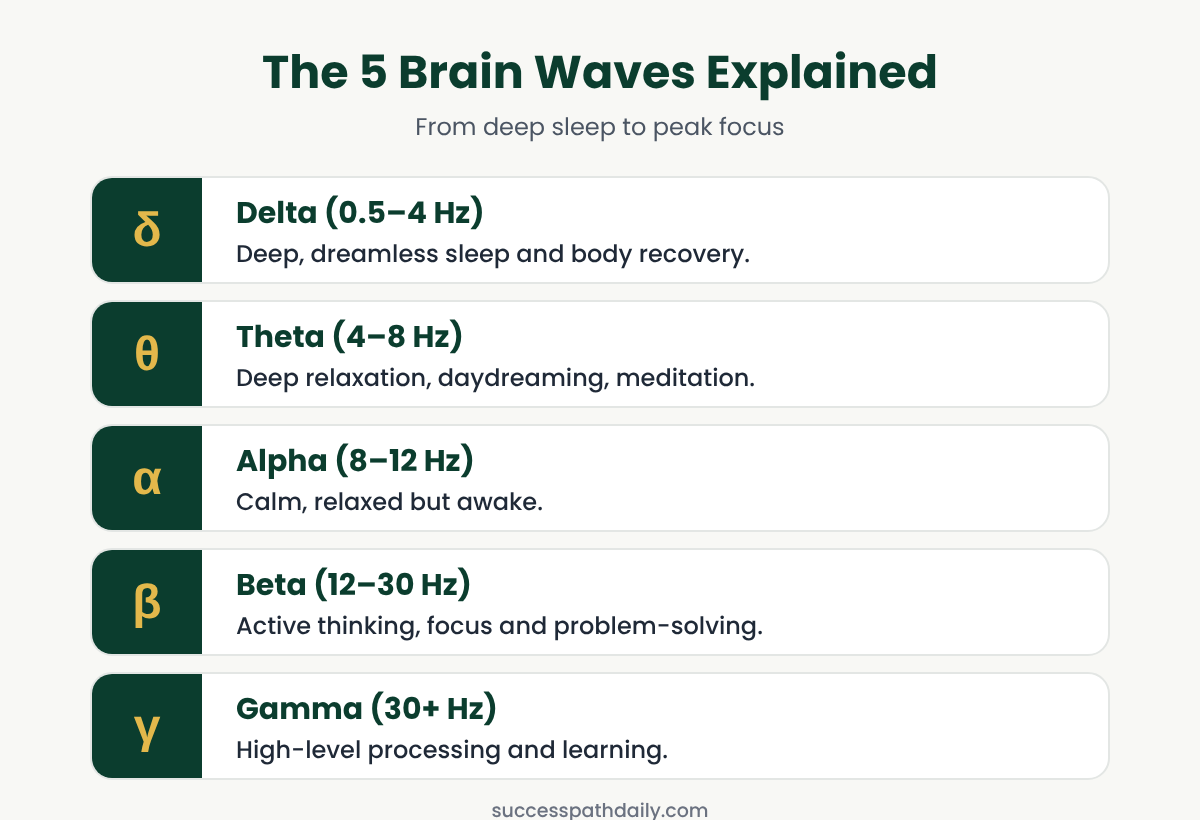
• Delta (0.5 to 4 Hz): the slowest waves, strongest during deep, dreamless sleep.
• Theta (4 to 8 Hz): linked to deep relaxation, daydreaming, light sleep and meditation.
• Alpha (8 to 12 Hz): a calm but awake state, like resting with your eyes closed.
• Beta (12 to 30 Hz): active thinking, problem-solving and focused work.
• Gamma (30 Hz and above): the fastest waves, linked to high-level processing.
What Are Theta Waves?
Theta brain waves sit between alpha (relaxed and awake) and delta (deep sleep). They tend to become stronger when your mind turns inward: as you drift off to sleep, during deep meditation, while daydreaming, or when you are absorbed in a calm, repetitive task such as walking or showering.
You have probably experienced a theta state many times without knowing it. Have you ever driven a familiar route and arrived without remembering the journey? Or had a great idea in the shower? Those relaxed, "autopilot" moments are often linked to more theta activity.
What Do Theta Waves Do for Your Brain?
Brain science is still developing, and theta waves are not a magic switch. However, research has linked theta activity to several useful mental states:
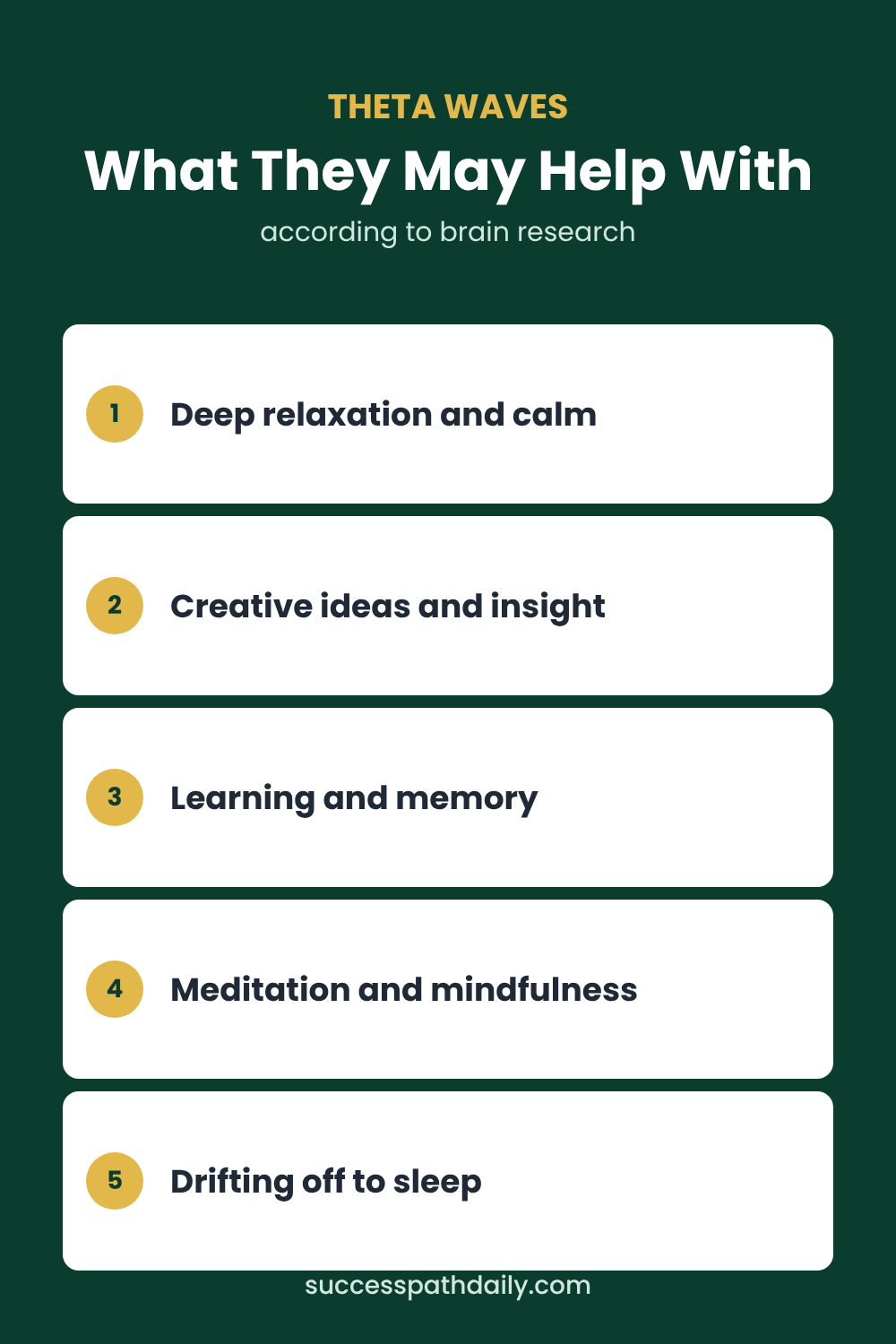
• Deep relaxation: theta activity often increases as the body and mind slow down, which is why it is linked to calm and stress relief.
• Creativity and insight: the relaxed, dreamy theta state is often associated with free-flowing ideas and "aha" moments.
• Learning and memory: studies, especially of the hippocampus, the memory area of the brain, have linked theta rhythms to how we learn and store new information.
• Meditation: experienced meditators often show stronger theta activity, particularly in the front of the brain.
• The path into sleep: theta waves appear naturally as you drift from wakefulness into light sleep.
In simple terms, theta waves reflect a mind that is relaxed but still active inside, a state where many people feel calmer, more creative and more open to new ideas.
Why a Busy Mind Struggles to Reach Theta
Modern life keeps most of us in a fast, alert beta state for much of the day: notifications, deadlines, money worries and constant screens. That is useful for getting things done, but spending too long in "high alert" can leave you feeling tired, scattered and stuck in overthinking.
The good news is that you don't need special equipment to give your mind a break. Simple daily habits can help you slow down and spend more time in calmer states.
7 Simple Ways to Reach a Calm Theta State
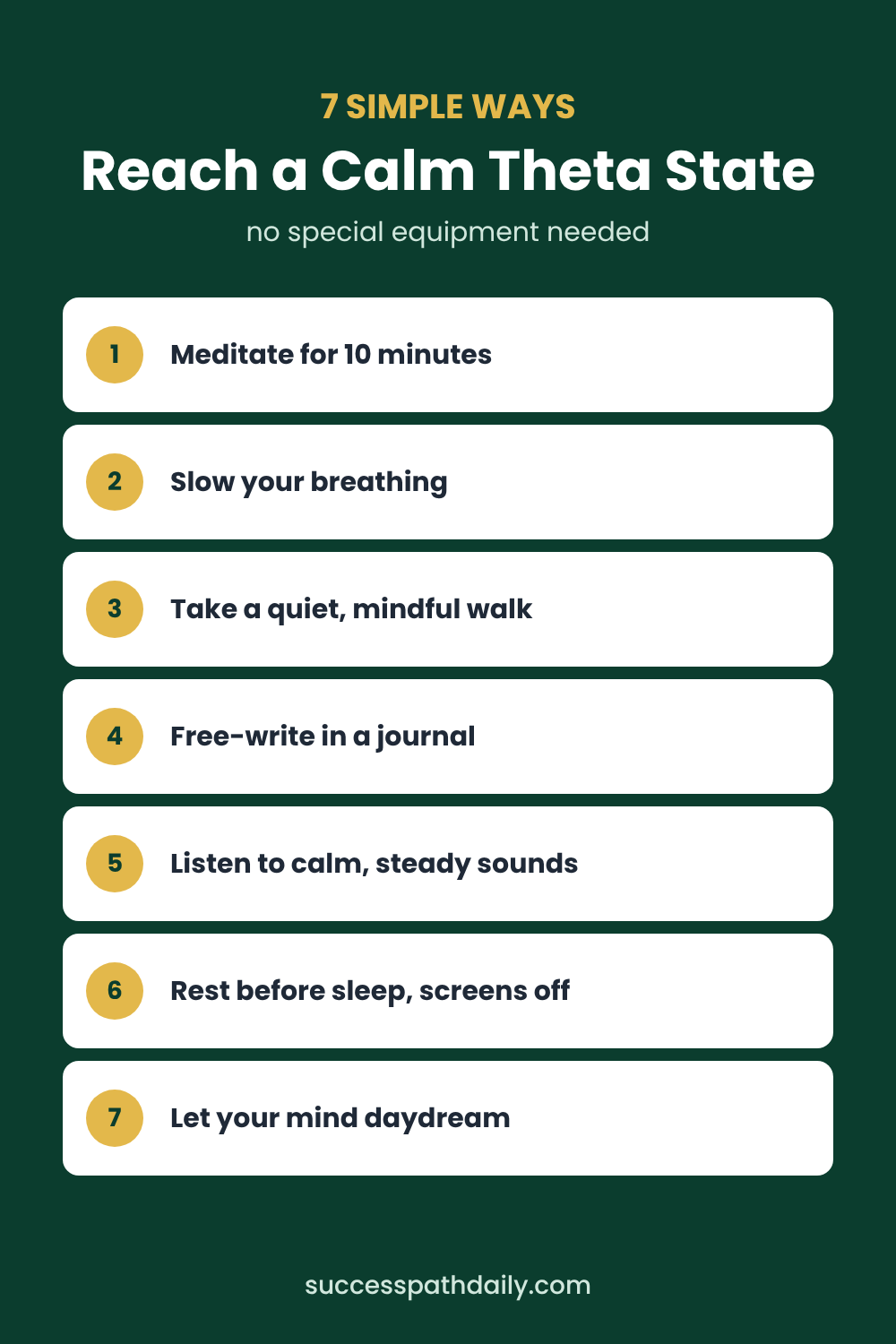
1. Meditate for 10 Minutes
Sit comfortably, close your eyes and focus gently on your breath. When thoughts appear, notice them and return to breathing. Theta meditation does not need to be complicated; ten quiet minutes a day is a great start.
2. Slow Your Breathing
Try breathing in for four counts and out for six counts, for two or three minutes. Slow, longer exhales help your body relax, making it easier for your mind to settle.
3. Take a Quiet, Mindful Walk
Walk without your phone and notice your steps, the air and the sounds around you. Gentle, repetitive movement is one of the most natural ways to let the mind drift.
4. Free-Write in a Journal
Write whatever comes to mind for five minutes, without editing. Letting thoughts flow onto paper can quiet mental noise and often brings surprising ideas.
5. Listen to Calm, Steady Sounds
Rain, ocean waves, soft music or slow, steady tones can help many people relax. Some people also use binaural beats or brainwave audio designed around theta frequencies (more on this below).
6. Rest Before Sleep, Screens Off
The minutes before sleep are a natural theta window. Put your phone away 30 minutes before bed and let your mind wind down. Keeping a notebook nearby lets you capture any ideas that appear.
7. Let Your Mind Daydream
Give yourself permission to do nothing for a few minutes: look out of a window, sip a drink slowly or lie on the grass. Daydreaming is not wasted time; it is often when creative connections form.
Theta Waves and Binaural Beats: What the Research Says
Binaural beats are created when each ear hears a slightly different tone through headphones, for example 200 Hz in one ear and 206 Hz in the other. The brain notices the 6 Hz difference, which falls in the theta range. The idea is that this may gently encourage the brain toward that rhythm.
Research results are mixed. Some small studies suggest binaural beats and similar audio may help some people feel more relaxed or focused, while others find little or no effect. Many listeners simply enjoy them as part of a calming routine, much like meditation music. It's best to see them as one helpful tool among many, not a guaranteed fix.
A Daily Audio Routine That May Help
If you’d like extra support alongside these free habits, a short daily listening routine can be easy to keep, even on busy days. One popular option in this space is The Brain Song.
The Brain Song is a 12-minute digital audio track from Neural Revive that you listen to once a day, according to its creators. Unlike the theta-focused habits above, it’s designed around gamma-frequency sound, the fastest type of brain wave we covered earlier, which is linked to focus and high-level thinking. It may suit people who like the idea of a simple, passive daily routine to help them feel more focused and mentally clear.
Please keep expectations realistic. Claims about brainwave audio have not been confirmed by strong scientific research, results vary from person to person and it is not a treatment for any medical condition, including memory problems. We see it as an optional addition to the free habits above. Check the official website for current pricing and the refund policy before deciding.
Frequently Asked Questions
What are theta waves good for?
Theta waves are linked to deep relaxation, daydreaming, creativity, meditation and the early stages of sleep. Research has also connected theta rhythms to how the brain learns and stores memories.
How can I increase theta waves naturally?
Meditation, slow breathing, mindful walking, free writing, calm sounds and resting before sleep are all simple ways to spend more time in relaxed, theta-like states.
Are theta waves the same as sleep?
Not exactly. Theta waves appear during light sleep and as you drift off, but also while you are awake and deeply relaxed. Deep sleep is mainly linked to slower delta waves.
Do binaural beats really create theta waves?
The evidence is mixed. Some studies suggest binaural beats may help certain people relax or focus, while others show little effect. They are generally seen as a relaxation aid rather than a proven way to change brain waves.
Is it safe to listen to brainwave audio?
For most people, listening at a comfortable volume is considered safe. Never listen while driving or doing anything that needs your full attention, and speak to a doctor first if you have epilepsy or another seizure condition.
Conclusion
Theta waves are the brain's rhythm of calm, creativity and inner focus, the state you reach when daydreaming, meditating or drifting off to sleep. While science is still learning exactly how they work, the habits that encourage theta states are simple, free and good for you anyway.
Choose one of the seven ways above, such as ten minutes of meditation or a phone-free walk, and try it every day this week. A calmer mind is often where clearer thinking and better ideas begin.
Affiliate link: we may earn a commission at no extra cost to you.
Get the free ebook: The Money Mindset Shift
Join our free newsletter and get the ebook straight away, plus one practical money mindset tip each week.

Comments
No comments yet. Be the first to share your thoughts.
Leave a comment